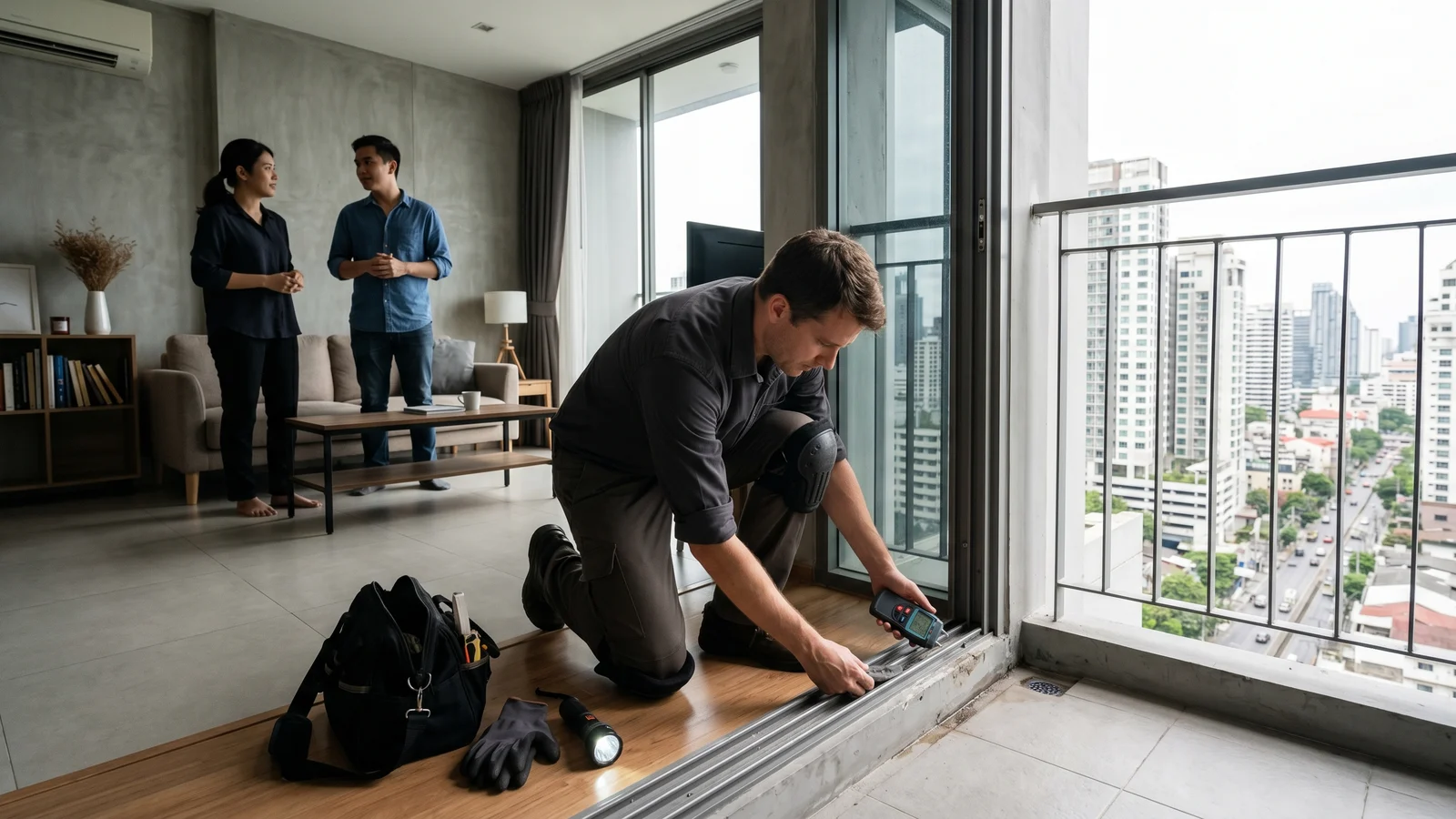
Condo Viewing vs. Real Inspection: What Bangkok Buyers Usually Miss
A viewing tells you whether you like the condo. An inspection tells you what condition you may be buying into.
In Bangkok, that difference is larger than many buyers expect.
Units are usually presented well: lights on, AC running, surfaces cleaned, small touch-ups done. That is normal sales prep. It is useful, but it is not evidence that systems have been tested or hidden defects have been ruled out.
What viewings are great for
Viewings are still essential. They help you judge:
- location and commute
- layout, light, and privacy
- building atmosphere and common areas
- noise at that specific time
- whether the unit fits your lifestyle
That is exactly what a viewing is for.
What inspections add
A pre-purchase inspection checks performance under use. It goes beyond first impressions.
Instead of asking “Do I like this unit?” you ask:
- Will this hold up in daily use?
- What defects are already present?
- What is likely to cost money soon after transfer?
That means testing, measuring, and documenting the findings properly.
Seven things a viewing often misses
1) Weak water pressure under real use
In many viewings, one tap gets opened for a few seconds.
During an inspection, multiple fixtures are tested across the unit. Pressure drop often appears only when systems are used together.
2) AC that feels cold now, but performs poorly
A room can feel cool because the AC was already running before you arrived.
An inspection checks cooling response, airflow, noise, and drainage. That is where aging units and partial blockages usually show up.
3) Seal failures around windows and wet areas
Fresh sealant and paint can make edges look perfect.
An inspection looks for seal failure, patchwork, and moisture clues that suggest repeat leak risk.
4) Outlets that look grounded but are not
Modern outlet faces do not guarantee proper grounding.
An inspection uses testers to check basic grounding and safety concerns, especially in wet areas.
5) Hollow tiles and debonding
Floors and walls can look fine at viewing speed.
Tapping checks can reveal hollow sections that may later crack or detach, especially in bathrooms and balconies.
6) Hidden moisture behind clean surfaces
A wall that looks dry during a midday viewing may still contain moisture.
An inspection focuses on common problem areas such as window corners, under sinks, bathroom perimeters, and AC line zones.
7) Balcony drainage problems
A balcony can look spotless on a sunny day.
An inspection checks slope, drain response, and door-threshold risk. Poor drainage is a common source of rainy-season complaints in Bangkok condos, especially during the monsoon period from roughly mid-May to October.
Why this matters before transfer
Before transfer, you still have options.
If material defects are documented, buyers can usually push for one of three outcomes:
- seller repair before handover
- price adjustment
- allowance/credit-style adjustment for post-transfer works
After transfer, the same issues usually become your cost and your contractor problem.
Practical sequence for buyers
- use the viewing to shortlist
- agree terms in principle
- inspect before final transfer
- decide with evidence, not assumptions
That sequence keeps the deal moving while giving the buyer evidence before the decision becomes hard to unwind.
Bangkok Inspect provides property inspection services only. This article is general information and does not constitute legal advice. For legal matters, consult a licensed Thai attorney.