Bangkok Condo Handover Defects to Catch Before Taking the Unit
Handover day is when buyers are most likely to accept a polished unit before they have tested how it performs.
The unit is clean, the keys are ready, and there is often some pressure to move the process along. That is why many handover checks end up focused on paint touch-ups, scratches, and loose handles.
Those items matter, but they are rarely the problems that cause the biggest headaches in the first year. The more expensive defects are usually the ones that only appear when water, AC, doors, seals, and appliances are tested like they will be used after transfer.
Cosmetic punch lists are useful, but incomplete
A proper handover check should answer a few practical questions:
- does water drain correctly in every wet area?
- does each AC unit cool and drain under test?
- are wet-area seals actually watertight?
- do windows and doors align, lock, and seal properly?
- are built-ins stable and correctly installed?
- do included appliances complete basic operating cycles?
If you only check cosmetics, you can accept a unit that looks new and still runs into trouble during the first rainy season.
1) Grouting: check integrity, not color
Fresh grout can look fine from standing height. Check it closely.
Common handover issues:
- pinholes and visible voids in joints
- weak/powdery grout at shower corners
- inconsistent depth that traps water
- early cracking around drains and wall-floor transitions
Practical check: inspect under bright light. If the grout rubs out with light pressure or has obvious gaps, record it.
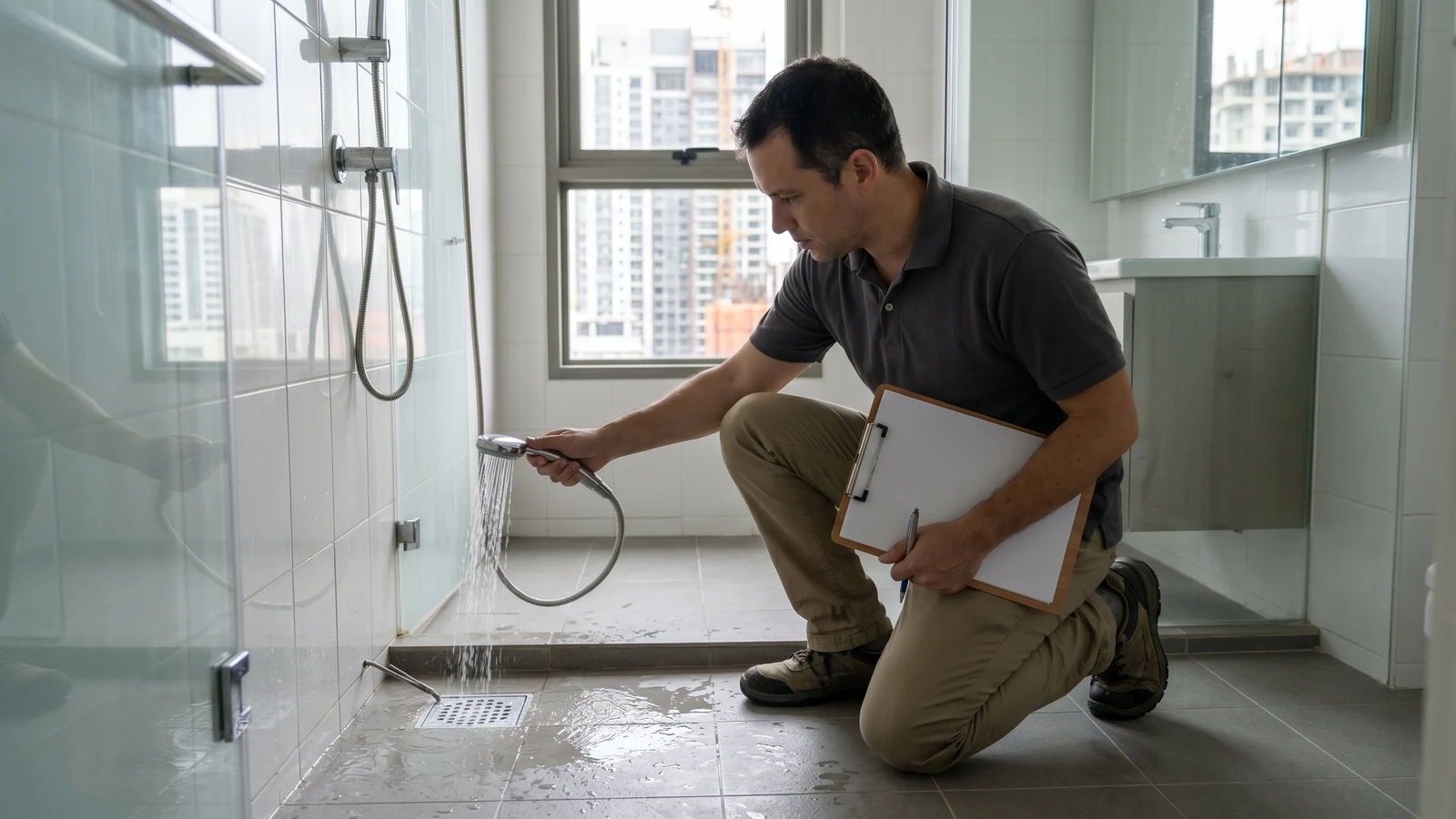
2) Drainage slope: one of the most missed defects
Poor slope shows up quickly once a unit is lived in.
Test these areas with enough water volume and time:
- shower floor to drain
- bathroom floor outside shower zone
- balcony slope away from door threshold
- kitchen and service-area drainage
You are looking for pooling, slow drainage, backflow smell, or water collecting along the edges.
3) AC performance: “air is blowing” is not a pass
In Bangkok, air conditioning is not a luxury. It is basic infrastructure.
During handover, the AC may already be running before you arrive. That can hide weak restart performance.
Check each indoor unit for:
- cooling response after restart
- clear temperature drop over a test period
- unusual vibration/noise
- stable condensate drainage (no indoor drip)
- moisture marks near trunking, ceiling, or wall below unit
4) Sealant quality: neat lines can still fail
Sealant defects are common in new units.
Check:
- window perimeters
- sliding door frames
- shower and tub edges
- sink/counter junctions
- balcony threshold transitions
Red flags include thin sealant lines, missed corners, peeling adhesion, and patchwork over gaps that should have been filled properly.
5) Windows and doors: test alignment and weather sealing
Opening and closing once is not enough.
For every window and door, test:
- smooth movement without binding
- correct lock engagement
- even frame contact when closed
- no visible daylight through seals
- no rubbing at tracks/thresholds
For sliding doors, inspect bottom tracks and drainage paths for standing-water risk.
6) Built-ins and cabinetry: inspect structure under the finish
Open every cabinet and drawer. Check:
- hinge alignment and closing tension
- drawer glide quality under light load
- board edges near wet zones
- countertop support and level
- soft-close hardware function
Look under sinks for moisture marks, swollen board edges, and rough plumbing cutouts that were never sealed.
7) Appliance checks: run real functions
If appliances are included, test actual function rather than stopping at the power light.
Minimum checks:
- hob/induction zones heat correctly
- hood fan speeds respond normally
- oven/microwave heats and door seals correctly
- refrigerator cools and seals properly (if included)
- water heater delivers stable hot water at test points
Before signing acceptance: a practical sequence
- Log every defect with exact location and photos or video.
- Separate cosmetic vs performance-critical items.
- Request written rectification timelines for critical defects.
- Keep communication in writing (email/official channels).
- Recheck corrected items before final closure.
The aim is simple. Do not inherit avoidable defects just because the unit looked good for 20 minutes.
Treat handover as property condition due diligence, not a ceremony.
Bangkok Inspect provides property inspection services only. This article is general information and does not constitute legal advice. For legal matters, consult a licensed Thai attorney.