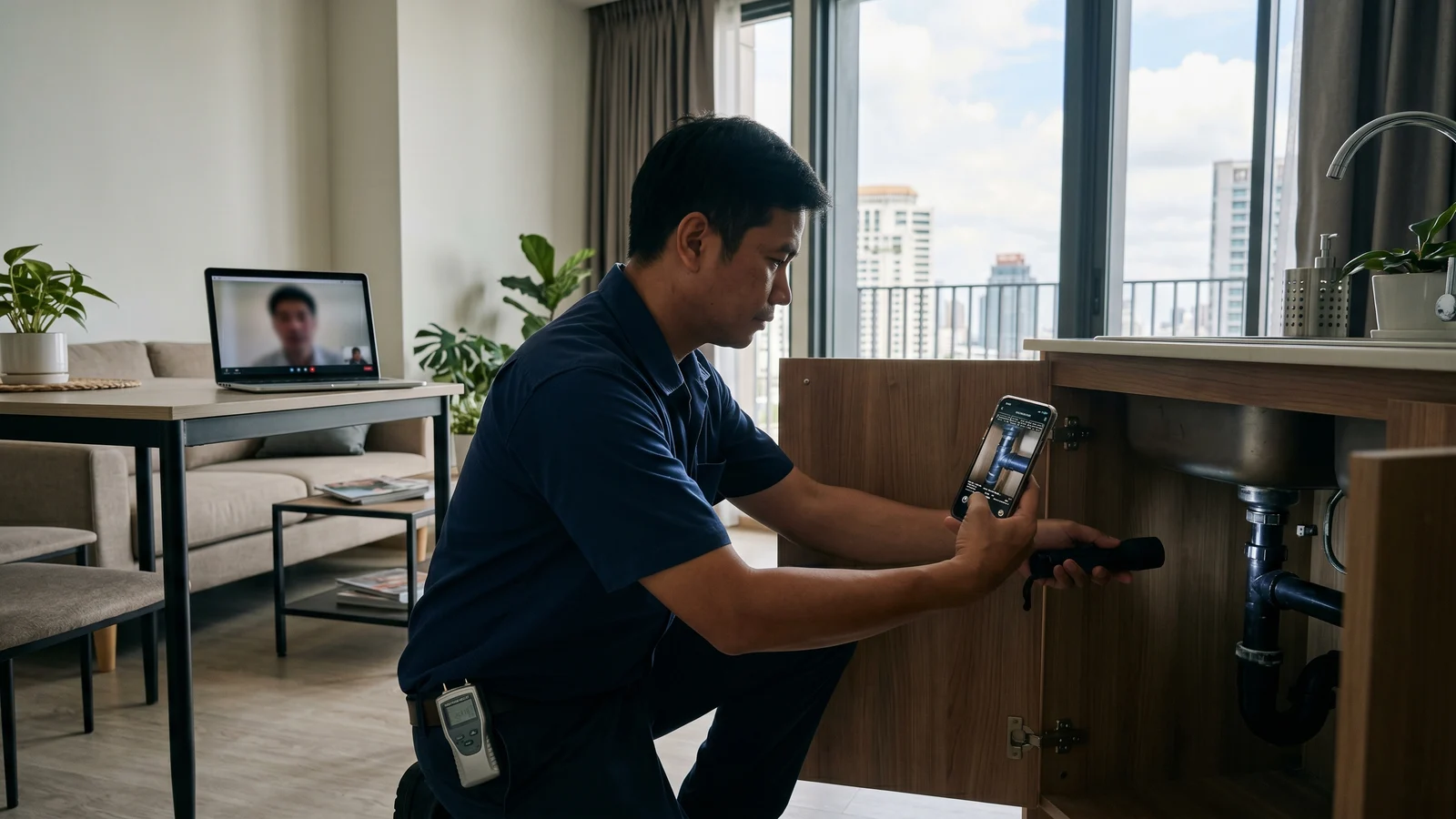
Quarterly Checks for Overseas Bangkok Condo Owners
Owning a Bangkok condo while living overseas is common, and it can work well.
The problem is that small issues stay invisible until they become expensive.
A quarterly check is usually frequent enough to catch early warning signs without turning the property into a constant management project.
Why quarterly checks make sense in Bangkok
Bangkok units deal with year-round humidity, heavy rain, and heavy AC use. Those conditions speed up moisture-related and mechanical issues.
In practice, three months is a sensible rhythm for remote owners:
- short enough to catch leaks, drainage problems, and AC decline early
- long enough to avoid unnecessary disruption for tenants
- structured enough to build a usable maintenance history
The quarterly checklist we recommend
Use the same checklist each cycle so you can track changes over time.
1) Moisture and water risk (top priority)
Check:
- window frames, corners, and sill lines for staining or bubbling paint
- wall and ceiling edges near bathrooms and balconies
- bathroom silicone and grout condition
- under-sink cabinetry for swelling or dampness
- balcony drainage flow and standing water marks
- persistent damp odor in enclosed spaces
Why this matters: moisture spreads quietly. Early repairs are usually straightforward. Delayed repairs often mean repainting, replacement boards, cabinetry work, and mold treatment.
2) AC performance and drainage
Check:
- cooling response by room
- unusual vibration or noise
- staining or drip marks near AC lines
- drain flow (no overflow, backflow, or odor)
- filter and coil cleanliness status
- latest service date and notes
Why this matters: in Bangkok, AC reliability is part of basic liveability. Most major failures start with smaller warning signs.
3) Wear-and-tear tracking inside the unit
Document:
- walls and corners (scuffs, dents, paint damage)
- flooring in high-traffic zones
- cabinet hinges, drawer tracks, countertop edges
- bathroom glass, fixtures, and sealant wear
- furniture condition (if furnished)
Why this matters: photo records reduce move-out friction because the discussion stays tied to evidence.
4) Unauthorized modifications
Look for:
- new drilling, wall penetrations, mounted systems
- altered lighting or electrical fittings
- changed locks or removed hardware
- balcony changes that affect drainage or façade rules
- non-standard plumbing hookups
Why this matters: some changes look minor but can affect waterproofing, safety, or building compliance.
5) Common-area condition signals
Observe:
- repeated water stains in corridors/lobby/parking areas
- lift condition and service reliability
- persistent damp smells in shared corridors
- blocked fire doors or neglected safety equipment
- visible deterioration in shared facilities
Why this matters: your unit’s long-term value depends on building operations as much as your own interior finishes.
6) Maintenance log quality
Track, for every issue:
- date found
- exact location
- photo/video evidence
- temporary vs permanent fix
- contractor used
- cost
- date resolved
- follow-up date (if applicable)
Why this matters: this record helps with budgeting, recurring issue diagnosis, and later resale due diligence.
A workflow that works for remote owners
Use this simple loop every 90 days:
- Schedule inspection window
- Run the same checklist
- Receive the summary and room-by-room photo findings
- Triage into urgent, next 30 days, and monitor
- Complete priority repairs
- Log closure evidence
Consistency matters more than complexity here.
What remote monitoring changes in practice
For overseas owners, structured quarterly checks usually mean:
- earlier defect detection
- lower emergency repair risk
- clearer tenant and contractor conversations
- cleaner records for future sale or refinancing
- better control without flying to Bangkok for every issue
Remote ownership does not have to be reactive. With a steady quarterly process, you can manage the unit through evidence rather than waiting for the next surprise.
Bangkok Inspect provides property inspection and monitoring support only. This article is general information and does not constitute legal, tax, financial, or property-management advice.