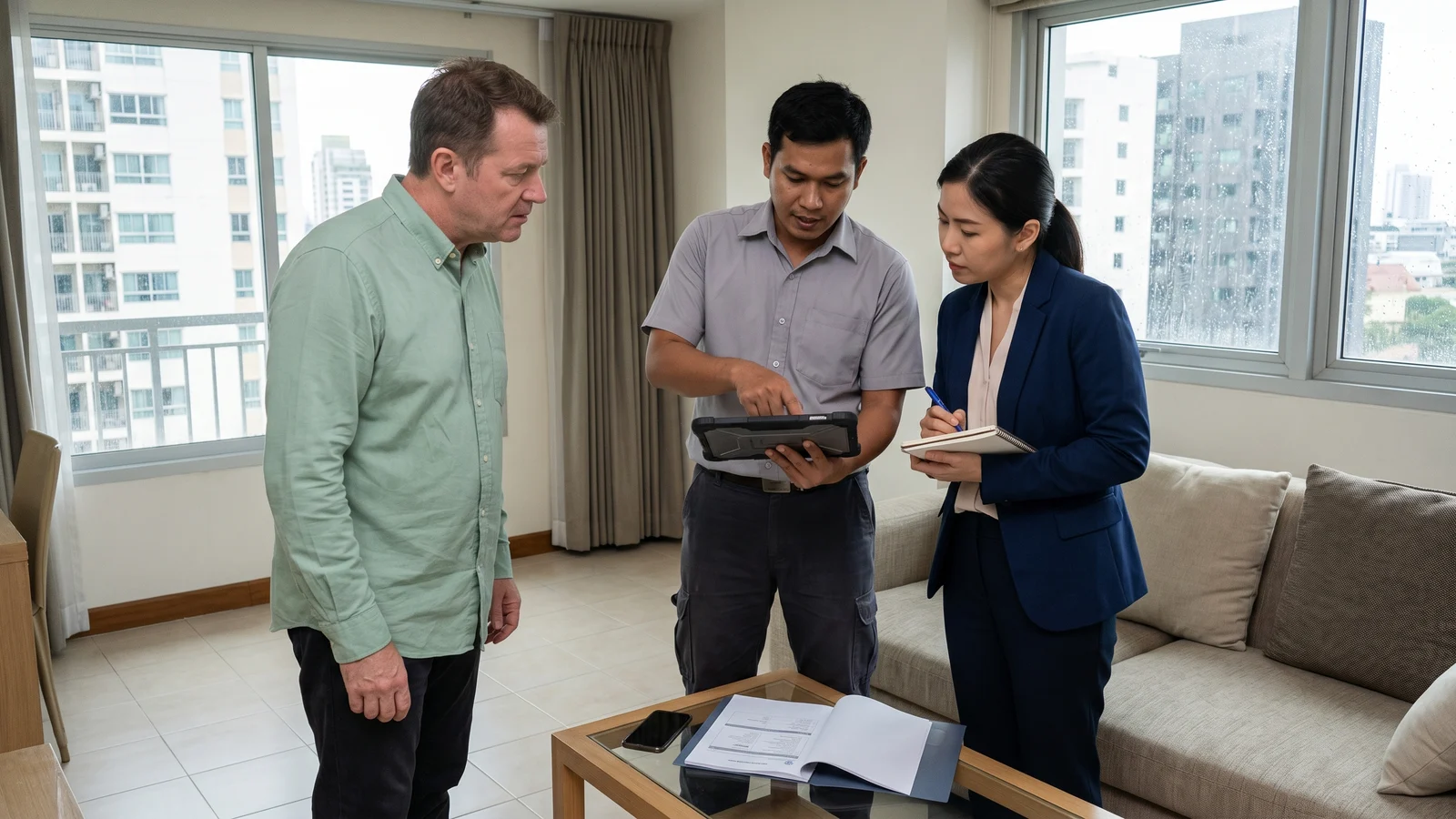
Why Bangkok Buyer Agents Should Use Third-Party Inspection Reports
If you represent foreign condo buyers in Bangkok, you already know that the hard part is rarely getting into the unit.
The hard part is giving the client enough confidence to make a decision.
They may be overseas, in a different time zone, and making a high-value purchase based on one or two short viewings. In that context, an independent inspection report is not deal friction. It is part of a sensible buying process.
Why this matters for buyer agents
When condition issues appear after transfer, clients rarely remember the market context. They remember who they trusted.
A third-party report helps keep responsibilities in the right place:
- the agent advises on market, strategy, and negotiation
- the inspector documents technical condition and risk
- the buyer decides based on evidence, not reassurance alone
That separation protects the client relationship and your professional role.
What changes when the report is independent
Without independent documentation, disputes become personal quickly:
- buyer vs seller
- buyer vs agent
- agent vs listing side
With independent documentation, the conversation changes:
- dated findings
- location-specific photos
- severity-based prioritization
- repair implications in plain English
Now the negotiation is about facts, not memory.
How this improves transaction speed
Most deals slow down because buyers are not sure what is cosmetic and what is material.
A good report helps answer four questions fast:
- What is urgent before transfer?
- What is negotiable but not urgent?
- What can be monitored after completion?
- Is the buyer still comfortable proceeding at this price?
Once those answers are clear, the next move is usually clear as well.
What to ask for in a report format
For foreign buyers, readability matters as much as technical depth.
Ask for:
- executive summary for quick review
- room/system breakdown for detail
- photo-evidenced findings tied to exact locations
- clear severity framework (critical / major / minor / monitor)
- practical next-step options for negotiation
This kind of structured English-language reporting is easier to use across agents, buyers, and legal teams.
A practical workflow for buyer-side agents
Use this process on serious foreign-buyer deals where condition risk matters:
Step 1: Set inspection expectations early
Position the offer stage as subject to condition verification, not final technical acceptance.
Step 2: Book inspection early in the diligence window
Do not wait until the transfer logistics are already locked in.
Step 3: Convert report findings into one negotiation memo
Keep it short and structured:
- item
- severity
- evidence reference
- requested remedy (repair / credit / price adjustment)
Step 4: Confirm resolutions in writing
Before transfer, document what was agreed and what remains post-transfer responsibility.
Step 5: Keep a clean record for the client file
This reduces future blame loops and helps protect referral trust.
Common mistakes to avoid
-
Using viewing photos as technical proof
Viewing photos are useful context, but not condition evidence. -
Forwarding full reports without guidance
Buyers need your strategic summary, not just a PDF in their inbox. -
Treating all findings equally
Prioritization is where negotiation leverage comes from. -
Leaving fixes verbal
Verbal assurances often disappear at handover.
Final takeaway
Third-party inspection reports do not kill good deals.
They strip out weak assumptions, clarify condition risk, and help serious buyers proceed with more confidence.
For buyer agents in Bangkok, that usually means fewer technical arguments, cleaner negotiations, and stronger long-term trust with foreign clients.