Luxury Bangkok Condos: Brochure Promises vs. Inspection Reality
Luxury condo marketing in Bangkok is polished for a reason. Buyers are not just being sold square metres. They are being sold a version of daily life.
Sometimes the product lives up to it. Sometimes it does not.
In real inspections, we still find defects in high-ticket units that many buyers assume only show up in mid-market buildings. Price changes the finish level. It does not remove the need to verify workmanship, systems, and building stewardship.
The key difference: presentation vs performance
Brochures and show units are built to answer one question: Do you want this unit?
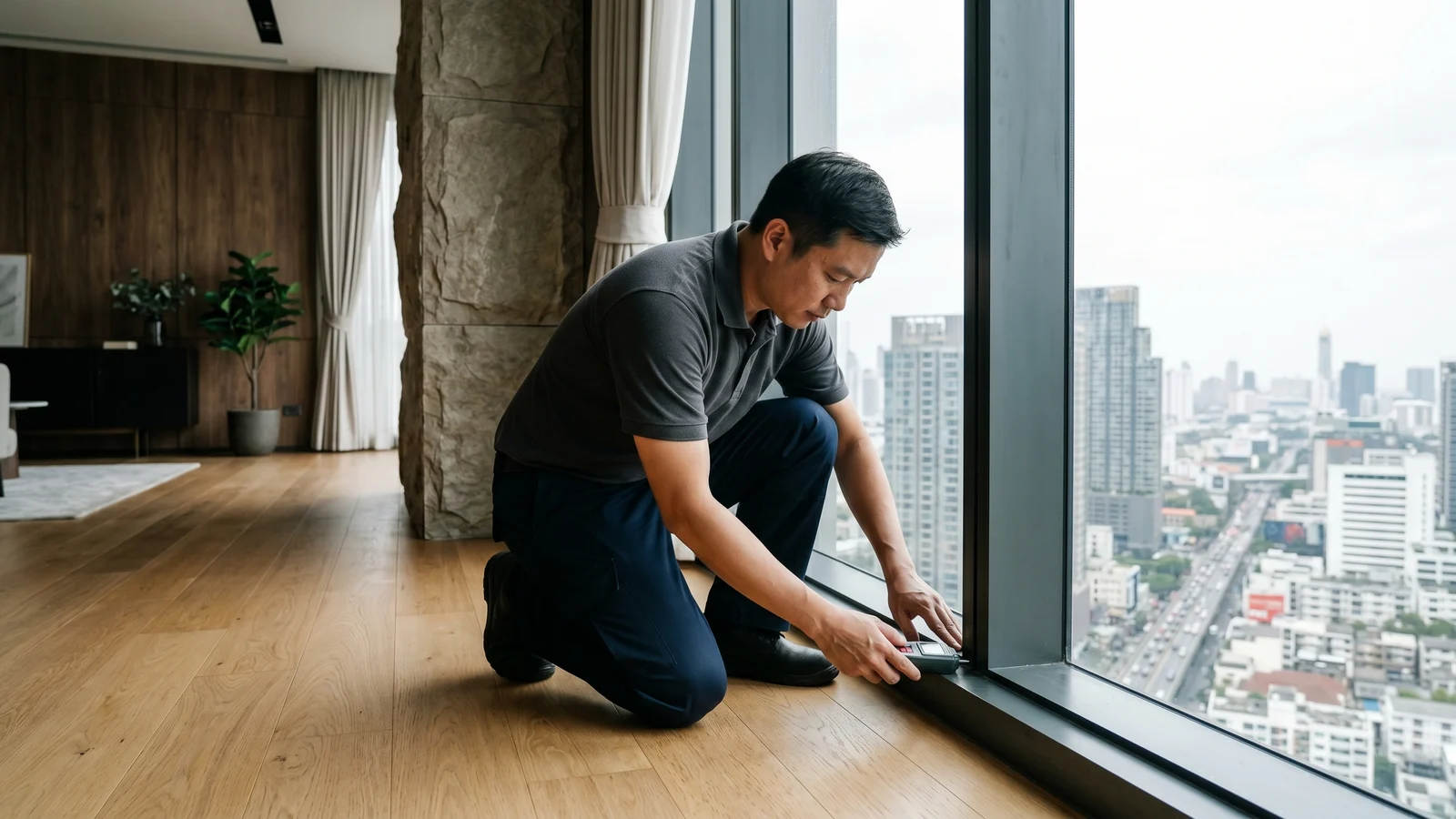
Inspection answers a different one: Will this unit perform properly after transfer, in real Bangkok conditions?
That is where the expensive surprises tend to appear.
Where luxury promises and on-site reality often diverge
1) “Exceptional craftsmanship” vs finishing consistency
In luxury units, problems are often subtle rather than dramatic.
Common examples:
- uneven silicone at wet-area joints
- chipped stone edges hidden by lighting angle
- misaligned cabinet faces in custom joinery
- hollow tile sections behind clean-looking finishes
- hairline cracks at window corners after early settlement
Any one item may look minor. Taken together, they tell you a lot about how carefully the unit was delivered.
2) “Private, seamless vertical access” vs daily elevator experience
Luxury listings frequently highlight lift quality: private lobbies, destination control, premium interiors.
During due diligence, daily usability matters more:
- peak-hour waiting behavior
- leveling accuracy at floor landings
- door sensor response
- vibration/noise during travel
- visible wear in lift interiors and controls
In high-rise living, elevator problems get annoying very quickly, even in luxury towers.
3) Signature glass facades vs monsoon leak risk
Large glazed facades are a core luxury selling point. They are also one of the first places where rushed sealant work or aging details can fail.
We pay close attention to:
- shrinking or separated perimeter sealant
- patch repairs that suggest recurring ingress
- damp staining near sliding tracks
- balcony threshold details that can backflow in heavy rain
A unit can look perfect in dry weather and still leak during monsoon conditions.
4) “Smart climate comfort” vs real AC performance
In Bangkok, AC performance is not an optional comfort feature. It is basic infrastructure.
Typical findings in premium units include:
- weak cooling response after restart
- imbalanced airflow between rooms
- slow or partially blocked condensate drainage
- compressor/indoor unit noise beyond normal operation
- signs of deferred maintenance in staged resale units
Weak AC performance means more humidity, more discomfort, and more maintenance cost down the line.
5) Launch imagery vs current common-area condition
Luxury projects often look perfect at launch. The real test is how they are being maintained years later.
Practical checks outside the unit:
- corridor wall/floor wear patterns
- moisture staining in service/back-of-house zones
- pool deck tile condition and slip risk
- gym equipment condition vs marketed standard
- parking structure water intrusion or patching history
Common-area condition is usually a management clue. If the visible areas are slipping, the hidden systems are rarely in better shape.
A practical due-diligence flow for luxury buyers
- Use brochures and tours to shortlist. They are good for style, layout, and fit.
- Check building operations before final commitment. Lift reliability and common-area upkeep matter as much as the unit itself.
- Inspect the exact unit independently before transfer. Testing beats assumptions.
- Negotiate from documented findings. Ask for repair, rectification timeline, or price adjustment.
The goal is not to kill the deal. It is to go into it with clear eyes and proper evidence.
What overseas buyers should do differently
If you are buying remotely, the risk rises because you have less time on-site and more reliance on the listing presentation.
At minimum, request:
- full photo/video defect documentation tied to room locations
- functional testing notes (not just cosmetic comments)
- confirmation of outstanding rectification items before transfer
- written handover records you can use in post-transfer follow-up
Luxury branding should be matched by execution. Independent inspection is how you check whether the standard is visible in the unit, not only in the brochure.
Bangkok Inspect provides property inspection services only. This article is general information and does not constitute legal advice. For legal matters, consult a licensed Thai attorney.